Kizhi
Kizhi - Herbal Poultice Therapy for Pain and Stiffness
Kizhi is a herbal poultice therapy, where herbs, powders, leaves, lemon, or egg are tied into cloth boluses, warmed, and pressed rhythmically over the body. The heat opens the channels while the herbs work directly into the painful area. It is one of the most effective therapies we offer for joint pain, muscle stiffness, and long-standing body ache, and the type of Kizhi used is decided by our physician after examining you.
4 Types
In-House Preparation
Physician-Led
Send us a Message
UNDERSTANDING THE THERAPY
What Is Kizhi
Kizhi is a classical Kerala Ayurvedic therapy in which medicinal ingredients are bundled into a cloth pouch, warmed, and applied over the body in firm, rhythmic strokes. The Malayalam word kizhi simply means bundle, and the therapy takes its name from that pouch.
What makes Kizhi different from an oil massage is the combination of heat, pressure, and direct herbal contact. The warmth relaxes the muscle and opens the pores, the pressure works into the stiff tissue, and the herbs inside the bolus pass their properties into the area being treated. This is why Kizhi is chosen for
Best Suited For
-
Joint Pain and Arthritis
Eases pain, swelling, and stiffness in the knees, shoulders, and small joints.
-
Back and Neck Pain
Relieves lower back pain, cervical stiffness, and strain from long hours of sitting.
-
Muscle Stiffness and Spasm
Loosens tight, knotted muscles and reduces cramping after physical strain.
-
Sports and Overuse Injuries
Supports recovery from sprains, muscle fatigue, and repetitive strain conditions.
-
Reduced Mobility
Improves range of movement in stiff joints and helps restore comfortable daily activity.
Four Kizhi Therapy
Types of Kizhi We Offer
Not every patient receives the same Kizhi. Your physician selects the type based on your condition, your dosha, and whether the affected area needs heat, cooling, or nourishment.
01
Podi Kizhi
Dry medicinal powders are heated and tied into cloth boluses. Best for stiffness, swelling, and heaviness in the joints, and for conditions linked to excess Kapha.
02
Ela Kizhi
Fresh medicinal leaves are chopped, sautéed in medicated oil, and bundled warm. Best for arthritis, back pain, muscle spasm, and Vata-related pain.
03
Naranga Kizhi
Lemon is sliced, fried with herbs and oil, and tied into the bolus. Best for cervical pain, frozen shoulder, sciatica, and stubborn muscular stiffness.
04
Mutta Kizhi (Egg Poultice)
Egg is cooked with medicated oil and herbs before being bundled. Best for nourishing weak or wasted muscle, and for conditions needing strength and support rather than only heat.
Why Choose Mukthi
What Sets This Clinic Apart
At Mukthi, we believe healthcare is more than just treatment. It is about restoring confidence, comfort, and peace of mind.
Phase 1
The Right Kizhi for the Right Pain
Many clinics offer one standard Kizhi to everyone. We do not. Our physician examines the joint, the nature of the pain, and your constitution before deciding whether powder, leaf, lemon, or egg is appropriate. Using the wrong type can aggravate a condition instead of easing it.
Phase 2
Fresh Preparation for Every Session
Leaves are chopped and sautéed, lemons sliced, and powders warmed for each session. Nothing is reused from a previous patient or a previous day. Our oils and powders are prepared at our own facility from herbs we source and verify ourselves.
Phase 3
Controlled Heat and Trained Hands
Kizhi works only when the temperature is right. Too cool and the herbs do nothing; too hot and the skin suffers. Our therapists are trained to test and maintain the bolus temperature through the session and to adjust pressure to what the joint can take that day.
Benefits
What Patients Typically Experience
At Mukthi, we believe healthcare is more than just treatment. It is about restoring confidence, comfort, and peace of mind.
- Relief from joint and muscle pain
- Improved joint mobility
- Reduced swelling and stiffness
- Deep muscle relaxation
- Better circulation to the affected area
- Easier movement in daily activity
Before You Book
Suitability & Precautions
Kizhi is highly effective for pain and stiffness, but it involves heat and firm pressure, so it is suitable only under physician supervision. A consultation before your first session tells us which type of Kizhi your condition needs and whether any heat-based therapy should be avoided for now.
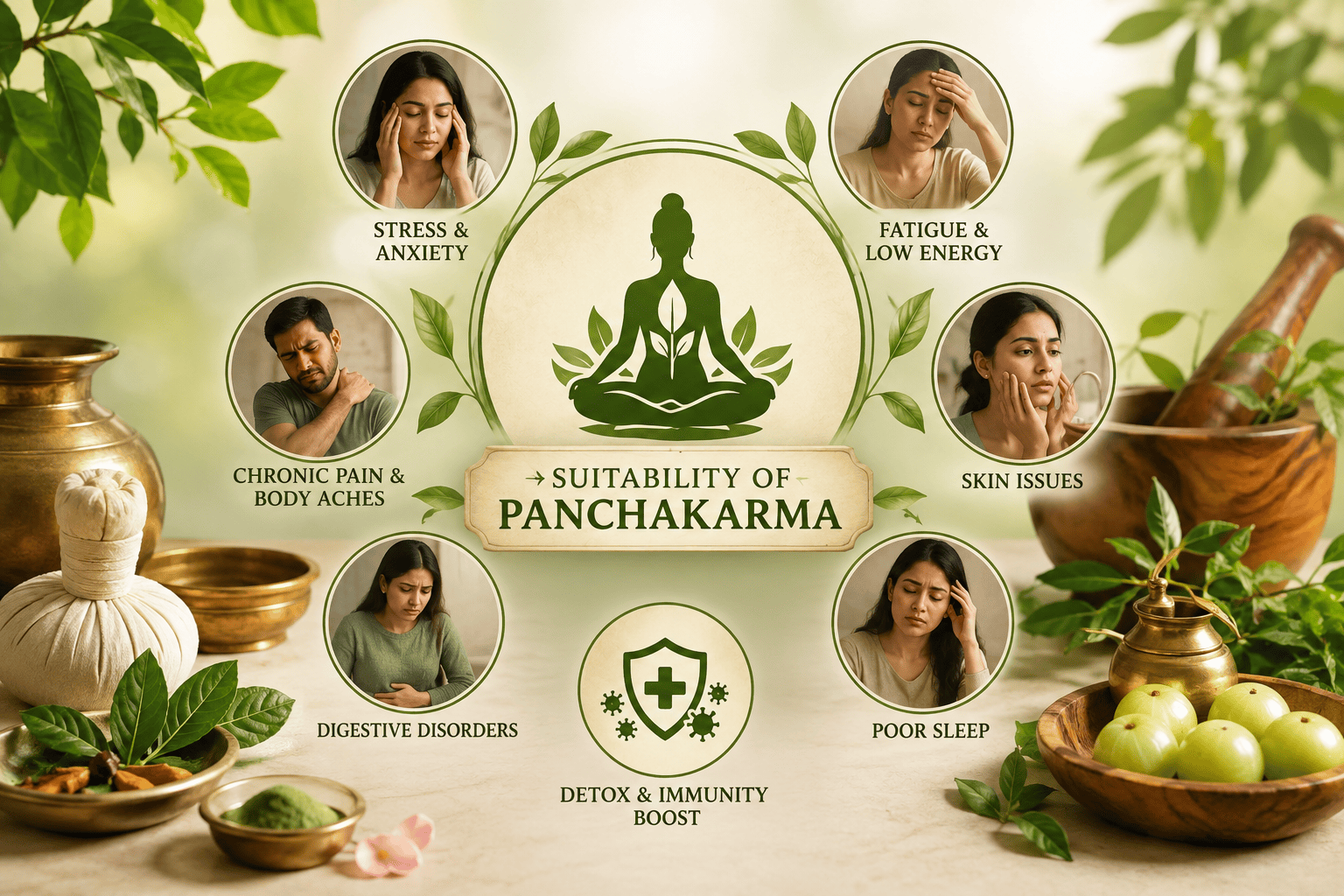
Suitability of Kizhi
Kizhi is best suited for individuals who:
- Live with joint pain, arthritis, or stiffness that limits daily movement.
- Have chronic back, neck, or shoulder pain from posture, strain, or long working hours.
- Are recovering from a sprain, muscle injury, or overuse condition.
- Need a supporting therapy alongside Panchakarma or Abhyangam for deeper pain relief.
Precautions During Kizhi
To ensure safety and effectiveness, follow these guidelines:
Do’s
- Tell your therapist immediately if the bolus feels too hot on the skin.
- Rest for a short while after the session and take a warm bath, never a cold one.
- Keep the treated area covered and warm, and stay on a light, easily digestible diet.
Don’ts
- Avoid Kizhi during fever, acute inflammation, active infection, or open wounds on the area.
- Do not take the therapy immediately after a heavy meal or on a completely empty stomach.
- Avoid cold exposure, cold water baths, and strenuous activity right after a session.
Why Choose Mukthi
Choose Your Panchakarma Duration
Lorem ipsum dolor sit amet, consectetur adipiscing elit, sed do eiusmod.
Introductory
7Days- Physician consultation & diagnosis
- Daily Abhyangam & swedana
- Basic Basti sequence
- Diet & lifestyle guidance
Complete Detox
14 Days- Physician consultation & diagnosis
- Physician consultation & diagnosis
- Physician consultation & diagnosis
- Physician consultation & diagnosis
Deep Rejuvenation
21 Days- Physician consultation & diagnosis
- Physician consultation & diagnosis
- Physician consultation & diagnosis
- Physician consultation & diagnosis

Mukthi Pharma
Pure Ayurveda. Pure Care.
FAQ
Frequently Asked Questions
Answers to what patients most often ask before booking their first Kizhi session.
No. The pressure is firm but controlled, and it is adjusted to what your joint can comfortably take. Most patients describe the sensation as deeply warm and relieving rather than painful.
That is decided by our physician after examining you. Powder, leaf, lemon, and egg poultices each suit different conditions, and using the wrong one can make a condition worse rather than better.
They are warmed to a tolerable therapeutic temperature and tested before touching the skin, then re-warmed through the session. Tell your therapist at once if it feels too hot at any point.
For mild stiffness, three to seven sessions are often enough. Chronic arthritis or long-standing back pain usually needs fourteen sessions or more. Your physician will give you a clear plan after assessment.
Yes. Kizhi is commonly performed after Abhyangam and is often included within a Panchakarma programme, since the oil application before it helps the herbs work deeper.
Many patients notice reduced stiffness after the first two or three sessions. Lasting relief in chronic conditions builds gradually across a full course rather than in a single visit.
Explore More
Related Treatments
Kizhi works best alongside our other therapies. Your physician can recommend the right combination for your condition.
Abhyangam
Full-body warm oil therapy that softens the tissues and prepares the body, usually performed before Kizhi for a stronger effect.
Kati and Greeva Vasti
Warm medicated oil held over the lower back or neck within a herbal dough ring, often paired with Kizhi for localised spinal pain.
All Treatments
Browse the full range of therapies at Mukthi, from Panchakarma and Shirodhara to seasonal rejuvenation programmes.
Ready to Book Your Kizhi Session?
Book a physician consultation to confirm the right type of Kizhi and session count for your condition.