Njavara Kizhi
Njavara Kizhi - The Nourishing Rice Bolus Therapy
Njavara Kizhi is a warm bolus therapy in which a special medicinal rice is cooked in milk and herbal decoction, tied into cloth pouches, and worked over the body by trained therapists. Every session begins with a physician assessment, so the decoction, the temperature, and the pressure are matched to what your body actually needs. It is not a relaxation treatment. It is a strengthening therapy used where tissue has thinned, muscles have weakened, or the body has not fully recovered from illness or strain.
60 to 90
Minutes
Boluses Made Fresh
Physician-Led
Send us a Message
UNDERSTANDING THE THERAPY
What Is Njavara Kizhi
Njavara Kizhi, known in classical texts as Shashtika Shali Pinda Sweda, uses Njavara, a red rice grown in Kerala that matures in sixty days and has been used as medicine rather than food for centuries. The rice is cooked in milk and a root decoction, most often Bala, then tied into cloth pouches called kizhi.
The pouches are kept warm in the same milk and decoction mixture throughout the session and applied in rhythmic strokes across the body. Heat, moisture, and nourishment reach the tissues together, which is what separates this from a dry or purely oil-based therapy. The warmth opens the channels, the cooked rice and milk feed depleted muscle and nerve tissue, and the steady pressure restores tone where the body has lost it. A short oil massage almost always comes first, so the skin is prepared before the boluses go on.
Best Suited For
-
Muscle Weakness and Wasting
Rebuilds bulk and tone in muscles that have thinned from disuse, illness, or age.
-
Neurological Complaints
Supports nerve function in conditions involving numbness, tremor, weakness, or reduced coordination.
-
Arthritis and Joint Degeneration
Eases pain and stiffness in worn joints without the dryness that aggravates degenerative conditions.
-
Post-Illness Debility and Emaciation
Restores strength and weight in a body that has not recovered its footing after prolonged illness.
-
Dull Skin and Poor Complexion
Improves texture, softness, and lustre by nourishing the skin from the tissue beneath it.
The Session
What a Njavara Kizhi Session Includes
Each session follows a fixed sequence. Your physician decides the decoction, the duration, and the pressure based on your assessment, so no two sessions are identical.
01
Consultation and Preparation of the Kizhi
A short physician assessment of your constitution, complaints, and current dosha state. The Njavara rice is then cooked fresh in milk and the selected root decoction and tied into cloth boluses.
02
Purvakarma
A brief application of warm medicated oil over the head and body, so the skin is ready and the heat of the boluses is carried inward rather than held at the surface.
03
Application of the Warm Boluses
The kizhi are kept warm in the milk and decoction mixture and applied across the body. Therapists check the temperature continuously and re-dip the pouches as they cool.
04
Sarvanga Pinda Sweda
Two therapists work in synchrony across the limbs, back, chest, and abdomen with even pressure, moving in the directions that classical technique prescribes for each region.
05
Cleansing and Rest
The rice paste is gently removed, followed by a fresh application of oil where needed, a warm bath, and a period of quiet rest before you leave.
Why Choose Mukthi
What Sets This Clinic Apart
At Mukthi, we believe healthcare is more than just treatment. It is about restoring confidence, comfort, and peace of mind.
Phase 1
Assessment Before Treatment
Njavara Kizhi is a nourishing therapy, and it is not right for every body or every stage of illness. Your constitution, digestion, and current complaints decide whether it is used, and how.
Phase 2
Genuine Njavara and In-House Decoctions
We source authentic Njavara rice and prepare our own root decoctions at our facility using classical formulations and verified raw herbs.
Phase 3
Trained Therapists, Consistent Technique
Our therapists are trained in classical bolus technique and work in pairs with matched rhythm and pressure. Temperature control is the hardest part of this therapy, and it is where experience shows.
Benefits
What Patients typically Experience
At Mukthi, we believe healthcare is more than just treatment. It is about restoring confidence, comfort, and peace of mind.
- Improved muscle strength and bulk
- Reduced joint pain and stiffness
- Better nerve response and coordination
- Softer, brighter, better-nourished skin
- Restored energy after illness or fatigue
- Steadier sleep and calmer mind
Before You Book
Suitability & Precautions
Njavara Kizhi is a strengthening therapy, and strengthening is not what every body needs at every moment. A physician’s assessment before your first session tells us whether the therapy is right for you now, and which decoction your body will respond to.
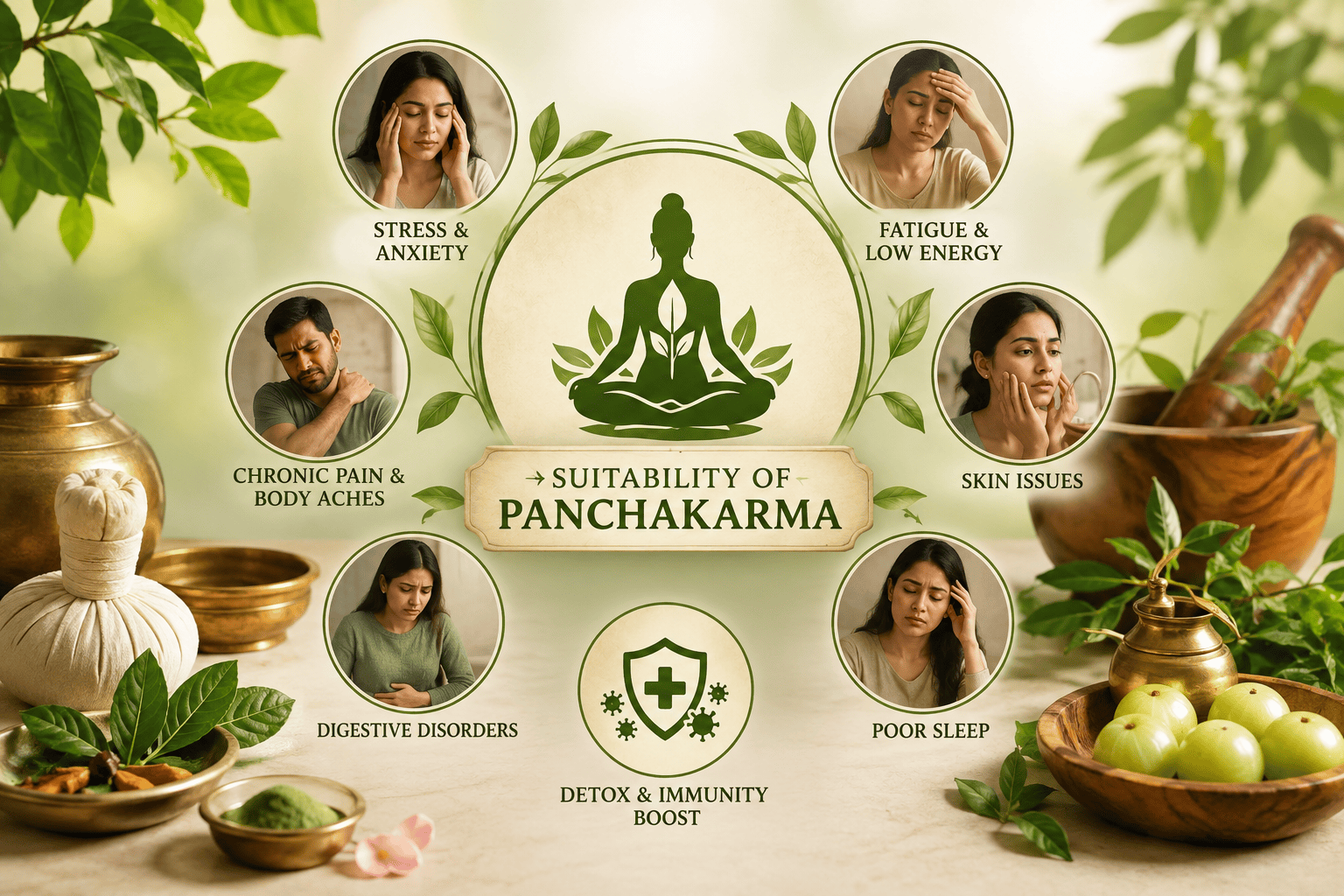
Suitability of Njavara Kizhi
Njavara Kizhi is best suited for individuals who:
- Have muscle weakness, wasting, or loss of tone from illness, injury, or age.
- Live with arthritis, joint degeneration, or chronic pain that worsens with dryness.
- Are recovering from a neurological condition and need support for nerve and muscle function.
- Feel depleted, underweight, or low in strength after a long illness or period of strain.
Precautions During Njavara Kizhi
To ensure safety and effectiveness, follow these guidelines:
Do’s
- Eat light before your session and leave a gap of at least two hours after a meal.
- Rest quietly for a short while after the therapy and take a warm bath, never a cold one.
- Drink warm water throughout the day and keep your diet simple and easily digestible.
Don’ts
- Avoid the therapy during fever, acute infection, indigestion, or heavy cold and congestion.
- Do not take Njavara Kizhi when digestion is weak or when there is active swelling, skin infection, or open wounds.
- Avoid strenuous exercise, cold exposure, and daytime sleep right after a session.
Why Choose Mukthi
Choose Your Panchakarma Duration
Lorem ipsum dolor sit amet, consectetur adipiscing elit, sed do eiusmod.
Introductory
7Days- Physician consultation & diagnosis
- Daily Abhyangam & swedana
- Basic Basti sequence
- Diet & lifestyle guidance
Complete Detox
14 Days- Physician consultation & diagnosis
- Physician consultation & diagnosis
- Physician consultation & diagnosis
- Physician consultation & diagnosis
Deep Rejuvenation
21 Days- Physician consultation & diagnosis
- Physician consultation & diagnosis
- Physician consultation & diagnosis
- Physician consultation & diagnosis

Mukthi Pharma
Pure Ayurveda. Pure Care.
FAQ
Frequently Asked Questions
Answers to what patients most often ask before booking their first Njavara Kizhi session.
Njavara is a distinct variety grown in Kerala that matures in sixty days and has been used medicinally, not as a staple food. It is valued for its ability to nourish muscle and nerve tissue, which is why classical texts prescribe it for weakness and degeneration rather than for general use.
Elakizhi uses heated medicinal leaves and works mainly on pain and inflammation. Abhyangam uses oil alone. Njavara Kizhi uses cooked rice, milk, and decoction together, which makes it the most nourishing of the three and the one chosen when tissue needs to be rebuilt rather than simply loosened.
Plan for about 90 minutes at the clinic. The bolus application runs 45 to 60 minutes, with additional time for the preparatory oil, cleansing, warm bath, and a short rest afterwards.
Njavara Kizhi is rarely useful as a single session. Our physicians usually recommend a course of seven, fourteen, or twenty-one days depending on your condition, often within a wider treatment plan.
The boluses are warm, not hot. Therapists test the temperature on themselves before each application and re-dip the pouches as they cool. Tell your therapist immediately if anything feels too warm at any point.
The therapy is generally avoided during active menstruation. During pregnancy, it is used only in specific circumstances and only with physician approval. Speak to our physician before booking.
Explore More
Related Treatments
Njavara Kizhi pairs well with several of our other therapies. Your physician can recommend the right combination for your condition.
Abhyangam
Full-body warm oil therapy with medicated oils chosen for your constitution. Usually performed before Njavara Kizhi to prepare the tissues.
Pizhichil
A continuous stream of warm medicated oil poured over the body. Often combined with Njavara Kizhi in courses for arthritis and neurological complaints.
All Treatments
Browse the full range of therapies at Mukthi, from Kati and Greeva Vasti to seasonal rejuvenation programmes.
Ready to Book Your Abhyangam Session?
Book a physician consultation to confirm the right oil and session count for your body.